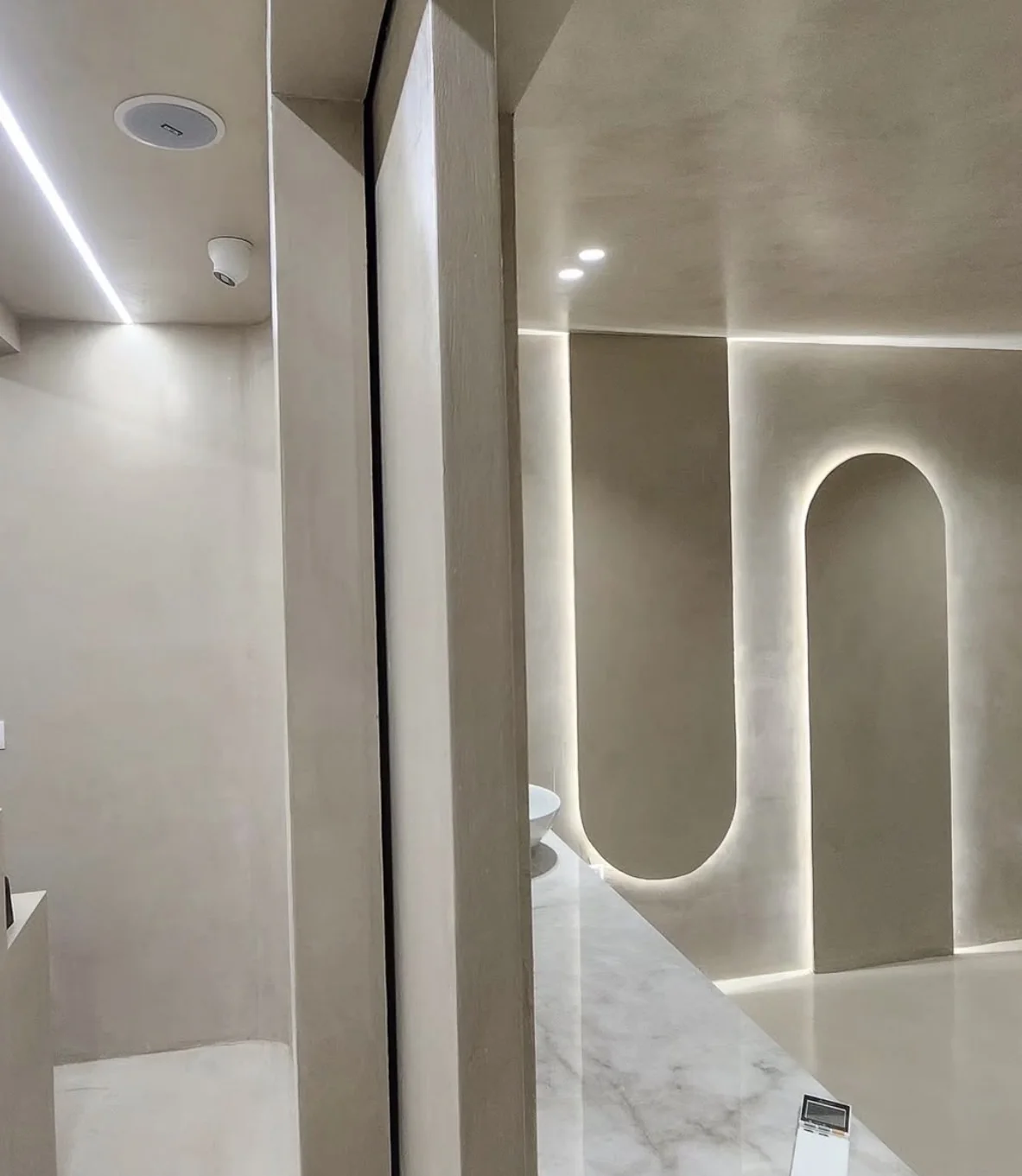
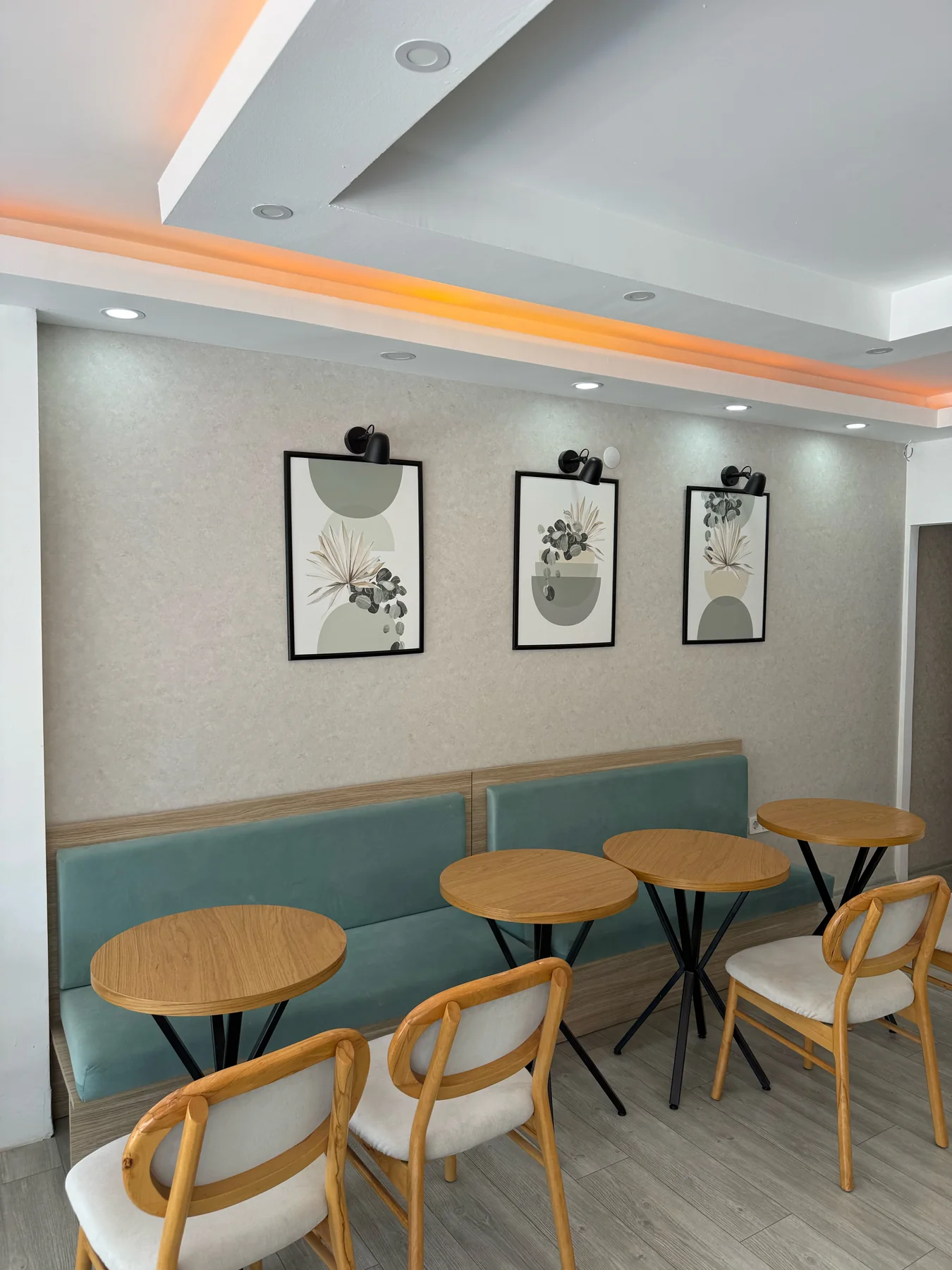
A large format sample shows movement, sheen, color shift, and application rhythm in a way that a small chip cannot. It gives the client and project team one clear visual standard before installation begins.
A color chip answers only one question
A small chip can help identify a color direction. It cannot show how a hand applied finish will move across a full wall. Limewash, Venetian plaster, metallic paint, and velvet finishes change with the applicator’s rhythm and the room’s light.
Large samples make those qualities visible. They reveal whether the movement feels calm or active. They also show how corners, grazing light, and adjacent finishes may affect the result.
View the sample in the project light
A sample should be reviewed where the finish will live. Daylight can cool a mineral color. Warm decorative lighting can deepen it. Strong side light can emphasize every trowel pass.
We prefer to review a sample vertically. The project team can then see how the finish reads from normal viewpoints throughout the day. This is especially important on double height walls and long corridors.
Record the complete system
The approved appearance depends on more than the visible coat. Primer, base preparation, number of finish coats, tool choice, and protective treatment all contribute to the result. A useful sample records those decisions.
That record reduces ambiguity during production. It also gives the builder, designer, and installer a shared standard for review. If a material or method changes, the sample should be revised before the full installation proceeds.
Treat the sample as part of the specification
The sample is not a sales extra. It is a project control. A signed or documented reference helps preserve the approved color, movement, and sheen from mockup through closeout.
This process protects the design intent and supports a calmer installation. It gives everyone a clear answer before the most visible work begins.